Google Rankings vs. AI Visibility: What Local Businesses Need to Know

Darryl MacDonald
For years, local businesses have focused on one major digital marketing goal: ranking higher on Google.
That still matters.
But the way customers search is changing.
Instead of simply typing “best plumber near me” or “fire protection company in Toronto” into Google and scrolling through links, more people are asking AI platforms direct questions such as:
- “Who is the best-rated plumber in Milton?”
- “What HVAC company should I call near me?”
- “Recommend a reliable local electrician.”
- “Which companies offer commercial fire protection services in Toronto?”
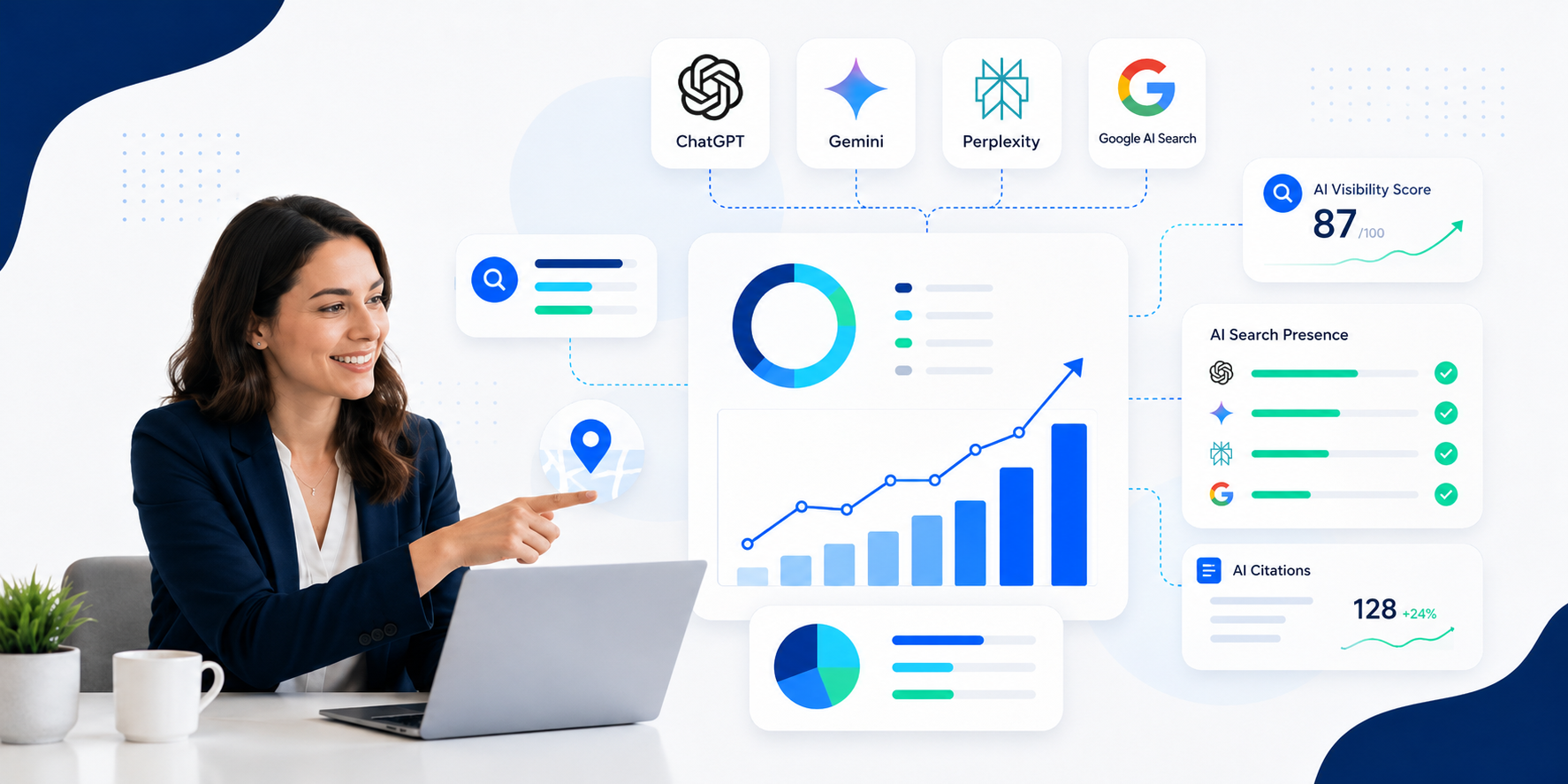
Platforms such as ChatGPT, Google Gemini, Perplexity, and Google’s AI-powered search experiences can give users summarized answers and business recommendations instead of simply displaying a traditional list of search results.
That creates an important distinction for local businesses:
Ranking on Google does not automatically mean AI will recommend your business.
Understanding the difference between Google rankings and AI visibility may become increasingly important as customers change the way they search.
What Are Traditional Google Rankings?
Traditional search engine optimization, or SEO, focuses on helping your business appear prominently when someone searches Google.
For a local business, your visibility may come from several places, including:
- Your website
- Google Business Profile
- Google Maps
- Local search results
- Service pages
- Blog articles
- Business directories
Google uses hundreds of signals to determine which pages and businesses appear for a particular search.
Strong local SEO typically includes a technically sound website, relevant service content, location information, backlinks, reviews, citations and an optimized Google Business Profile.
If you rank well for valuable keywords, customers have a greater chance of discovering your company.
But AI search introduces another layer.
What Is AI Visibility?
AI visibility refers to how easily AI platforms can find, understand, trust and recommend your business when someone asks a relevant question.
Instead of thinking only about where your website ranks, you need to think about whether an AI platform understands:
What you do.
Who you serve.
Where you operate.
Why someone should trust you.
How you compare with other businesses.
AI systems may consider information from multiple sources when forming an answer.
That can include your website, Google Business Profile, business directories, customer reviews, third-party websites, articles, citations and other publicly available information about your company.
Your website is important, but it is only part of your overall digital footprint.
Ranking on Google Does Not Guarantee an AI Recommendation
Imagine two local businesses.
Business A ranks well on Google for several important keywords.
Its website has been optimized for search engines, but its service descriptions are vague, its business information varies between directories and it has relatively few recent reviews.
Business B may rank slightly lower.
However, its website clearly explains its services, locations and expertise. Its Google Business Profile is complete, its business information is consistent across the web and customers regularly leave detailed reviews.
When someone performs a traditional Google search, Business A might appear first.
But when someone asks an AI platform:
“Which local company would you recommend for this service?”
Business B may provide stronger signals for an AI system to understand and verify.
That is why businesses should increasingly think about SEO and AI visibility together rather than treating them as the same thing.
Google Search Is About Rankings. AI Search Is About Recommendations.
Traditional search usually presents options.
AI search often attempts to interpret those options for the user.
That difference is significant.
A traditional search result might show ten companies.
An AI-generated answer may mention only a few.
In other words, businesses are no longer competing only for a position on a search results page.
They may also be competing for a place on an AI-generated shortlist.
Your goal should therefore be to make your business easy for both search engines and AI platforms to:
Find → Understand → Verify → Trust → Recommend
What Helps Improve AI Visibility?
Many of the fundamentals of good SEO also support AI visibility.
The difference is that businesses should think beyond individual keyword rankings and strengthen their entire online presence.
1. Clear Website Content
Your website should clearly explain what your company does.
Avoid vague statements that require visitors—or AI systems—to figure out your services.
Create dedicated pages for important services and clearly describe the problems you solve.
2. Accurate Location and Service Area Information
Make it obvious where you operate.
Local businesses should clearly identify cities, communities and service areas where appropriate.
3. A Complete Google Business Profile
Your business category, services, hours, contact information, description and other details should remain accurate.
Your Google Business Profile is an important source of information about your company.
4. Consistent Business Listings
Your company name, phone number, address, website and other important information should be consistent across reputable online directories.
Conflicting information can make your business harder to verify.
5. Strong Customer Reviews
Reviews provide valuable trust and reputation signals.
Detailed reviews can also help clarify the services you provide and the experiences customers have with your company.
6. Helpful FAQs and Content
Create content around the questions customers actually ask.
Instead of publishing content simply to target keywords, answer genuine customer questions clearly and thoroughly.
This supports traditional SEO while making your expertise easier for AI systems to interpret.
7. Third-Party Authority Signals
Mentions of your business on reputable websites, associations, directories and industry resources can strengthen your overall online presence.
When multiple credible sources confirm information about your company, your business becomes easier to understand and verify.
Local Businesses Need SEO and AEO
SEO is not disappearing.
Businesses should continue optimizing their websites for Google, improving local rankings and maintaining strong Google Business Profiles.
But local search marketing is expanding.
Answer Engine Optimization (AEO) focuses on helping your business become easier for AI-powered search engines and answer platforms to understand and surface.
The strongest strategy is not:
SEO or AI visibility.
It is:
SEO + AEO + strong online authority.
Your business should be easy to discover whether someone searches Google, asks ChatGPT, uses Gemini, checks Perplexity or receives an AI-generated search answer.
Is AI Recommending Your Business—or Your Competitors?
You may already know where your business ranks on Google.
But that leaves another important question:
What happens when your next customer asks AI who they should hire?
Your competitors may already be appearing in conversations where your business is missing.
Kanuck AI’s Free AI Visibility Report helps identify how your business appears across major AI platforms and where potential visibility gaps may exist.
You can uncover areas such as unclear business information, weak authority signals, inconsistent listings, reputation gaps and opportunities to strengthen your presence for both traditional search and AI-powered discovery.
Find Out How Visible Your Business Really Is
Find out whether your current online presence is strong enough for both Google and AI search.
Get your Free AI Visibility Report and see whether AI can find, understand and recommend your business—or whether your competitors are taking your place on the shortlist.